
One meaningful way to show up for the people and animals you love is to make a plan for them in your will. August is National Make-A-Will Month, and you can start the month off on the right paw by creating a plan for the future.
Humane Pennsylvania is proud to help make this important task more accessible to our caring community and all those who need to write a plan. Make-A-Will Month offers a moment to take stock of the people and causes we love and make sure their futures are provided for when we are no longer able to care for them.
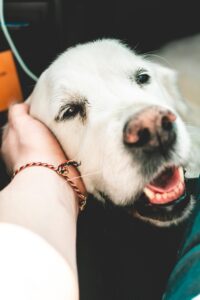 Creating a legal will is an opportunity to craft intentional plans that protect your loved ones and eternalize the values that have guided your life, like compassion and caring for animals in need. Legacy support is an easy way to be a part of the solution for years to come.
And, contrary to popular belief, writing your will doesn’t have to be expensive, time-consuming, or scary. This free online tool from our friends at FreeWill makes the process quick and easy, allowing you to complete your will in just 20 minutes from the comfort of your home.
If you don’t have an up-to-date will, we invite you to use FreeWill to create your plan this month, and to consider including a legacy gift for Humane Pennsylvania. It’s an easy way to make your mark — in a good way!
If you have already created a lasting legacy with Humane Pennsylvania, please fill out our online form to let us know about your gift! We would love to thank you for supporting area animals in such a powerful way.
Take Control of Your Legacy
Why should you make a will?
No matter your circumstances, every person who is 18 or older needs a legal will in place to plan for the future and make a lasting commitment to the people and causes that matter most to them. Writing a will is a vital part of protecting your loved ones — including your animal companions — and making a plan for how your assets are to be distributed.
Why use this free estate planning tool?
Making a will doesn’t have to be complicated or expensive, but many people avoid the task because they assume it will be. Our friends at FreeWill make the process easy, intuitive, and free. In less than 20 minutes your will can be completed and ready for your signature. You don’t have to submit any sensitive personal information, and you’ll finish with a PDF of your will that is valid in all 50 states.
Why should you begin your legacy with Humane Pennsylvania?
Creating a legacy with Humane Pennsylvania is a powerful way to transform the lives of animals and their caretakers, for generations to come. It represents your lasting commitment to saving animal lives and being part of the solution — today, tomorrow, and forever.
If an immediate cash gift isn’t right for you, or if you want to make a profound long-term investment in the welfare of area animals, we encourage you to consider including a gift to Humane Pennsylvania in your will. Your support would mean so much!
Get started creating your free will today.
If you have questions about FreeWill or planned giving at Humane Pennsylvania, please contact our Director of Development, Lauren Henderson Pignetti at 610-750-6100 ext. 211 or lpignetti@humanepa.org.

 After spending over 30 years in the animal welfare world, Humane Pennsylvania (HPA) President & CEO Karel Minor knows a thing or two about helping animals and their caretakers who love them. As the second longest-tenured leader in animal sheltering in Pennsylvania, he is looking back at the progress made and strides taken over his 20 years as CEO of Humane PA.
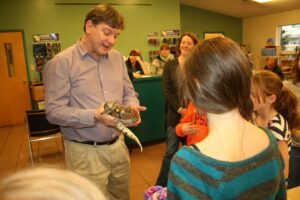 be done, usually with no real data to back it up, just opinion and gut feeling. Animal welfare felt hopeless and fatalistic and if you suggested we could save animals’ lives and help people try new things, our peers looked at us like we were stupid. If you suggested adopting cats at Halloween, waiving adoption fees, or adopting at Christmas, people thought you were insane. Twenty years ago, when I started at HPA, which was known as Berks Humane Society at that time, I met a core of staff, board, volunteers, and donors who were willing to be open-minded. They saw that what we had been doing wasn’t working- at least not for the 4,000 animals being euthanized each year- and they took the risk with me to try new and even taboo approaches. It worked, we kept it up, and we helped spread that attitude around the country.
 My greatest influence in animal welfare is Dr. Michael Moyer, who hired me at my first shelter 32 years ago. Back then, he was the extremely rare executive director who happened to be a veterinarian. He approached animal welfare like a scientist, used data, and encouraged me to do the same. However, my biggest professional influence is my wife, Dr. Kim Minor, who was one of the extremely rare educators who is a genuine genius, uses data and genuinely cares about doing what’s best for kids, even when it’s hard or personally risky. There is a bizarre similarity to how the education system writes off a lot of kids just like many animal shelters do with animals. Her example of doing what is right for each individual child and how that improves the well-being of children as a population has always motivated me to do the same for animals and the families they are attached to.
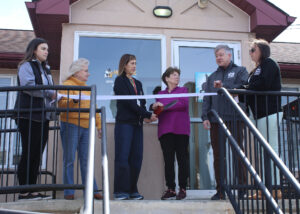 have been with HPA ranging from just one year to nearly twenty years. One person can’t succeed alone and we have built a group who take their work seriously and know they can make a concrete positive difference for the animals and people in our community.
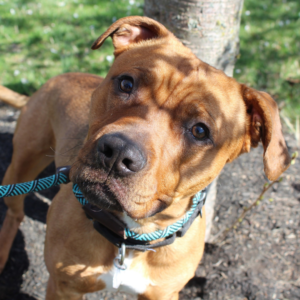 When a mosquito has a blood meal from a dog that has adult heartworms, the microfilaria is taken in by the mosquito and undergoes transformation to a larval stage, which can now be a source of infection for another dog. This larval stage parasite is injected from the mosquito to another dog with the next blood meal the mosquito takes.
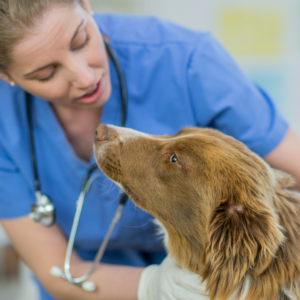 larval stage of the heartworm before it has the chance to mature into an adult worm and cause excessive damage.
 Thursday, February 23, 2024, is World Spay Day, and
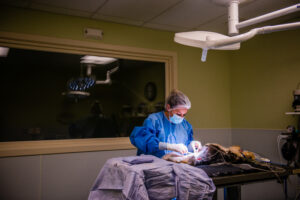
 pets will prevent future costly issues such as uterine infections, cancers, and behavioral problems. For more information or to make an appointment, please visit our website:
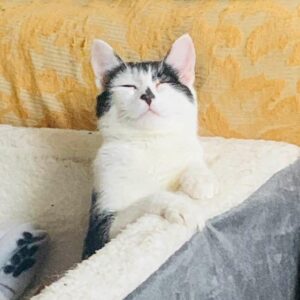
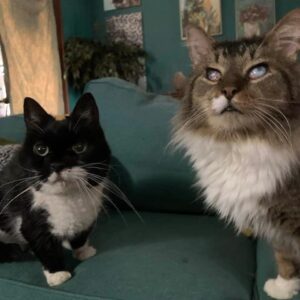 infection among other things. After her vet check, it was recommended to adopt her out as hospice care. I decided to adopt her knowing I might not have her for long. Sadly, she passed away four months later, but I made sure she spent the last few months of her life happy and loved.
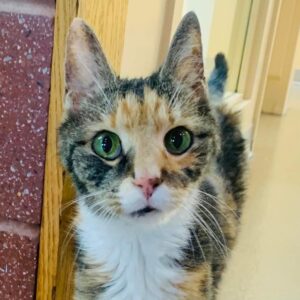 One September morning a cat was abandoned at the shelter. We scanned the cat and found out she was adopted from our organization 15 years ago. She was frail and extremely underweight. Her name was Rapunzel but I called her Princess Thumbs because she was a polydactyl cat. After getting her blood work done it turned out that she had hyperthyroidism and needed to be on medication and a special diet. After doing some research about the disease, I adopted her. I was not sure of the outcome since she was so thin and I had no idea how long she was in this condition but I was determined to try. Unfortunately, her illness was too far gone, but she did give me two wonderful weeks. She was truly an amazing cat. I miss you, my crunchy princess.
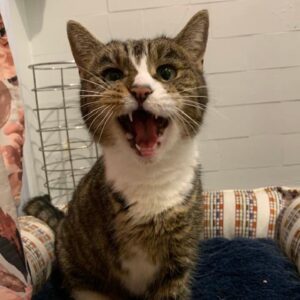 surrendered for meowing too much. Her name was Marigold. She was super sweet and did indeed “talk” a lot, which made me love her even more. After getting blood work done for her, results showed that she had hyperthyroidism. I was a little nervous because I was worried I would lose her too. I still decided to adopt her and give her a chance. Well, she is now a happy cat that “talks too much” if her bowl is empty. She will hop after you like a rabbit making sure you hear her loud and clear.
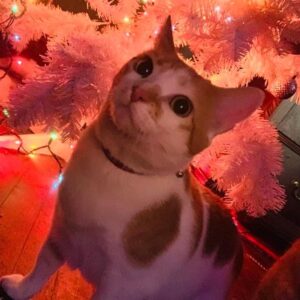 During our annual 12 Days of Adoptions event during the holidays, the majority of the cats at the shelter were finding homes. There was one cat I was hoping would find her furever home since she had been overlooked for 8 months. Her name was Karma, an adorable Orange and white cat with the cutest “RBF” squishy face. Karma had a few medical issues. She was FIV+, had an old ankle injury that made her limp, and experienced bladder issues which would require a special diet and medication for life. When Christmas Eve and the last day of the adoption special arrived, I told Karma “It’s time to go home”. It’s been two months since she came home and I’m so happy I made that decision. Her health has since improved and she couldn’t be happier in her new home.
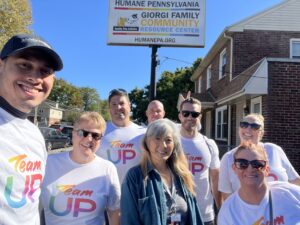 Volunteer Your Time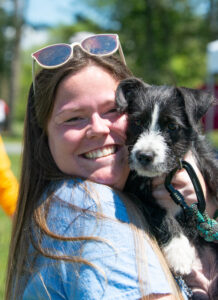
 I joined Humane Pennsylvania (then Humane Society of Berks County) as executive director nearly twenty years ago. I had previously worked at a larger and better-funded animal shelter. But when I compared the output of the two organizations, I was surprised to find our little animal shelter did more and provided more of some services than the other, bigger shelter, despite having fewer resources.
 Our innovative veterinary services deliver tens of thousands of client visits, surgeries, and services to animals and people from all walks of life and economic circumstances each year. Our pet food pantry distributes a couple hundred thousand pounds of food and supplies annually. We have created programs that do more and do it more effectively than places that are entirely out of our league in size and resources.
 are sustainable, and serve the current needs of our community rather than past needs. These include:
 These initiatives will help more animals and people, save lives, save resources, and serve as models for other organizations who might look to us for inspiration, just as we look to others for new ideas and approaches. Every year (month, day!), the world changes, and the needs of animals and people in our community change, too. You can’t be prepared for everything, but a culture of growth and innovation makes it easier to respond to the unexpected and to change paths when needs change. That path has helped us survive major economic downtowns and a pandemic. It’s also allowed us to recognize needs and problems before they are widely recognized as such.
 Humane PA is very excited to share details about our next steps to deliver the most impactful services to animals and people in our community! The needs of animals and the community have rapidly changed a great deal in recent years. In the last 20 years, the number of animals entering Humane PA shelters has declined by over 85%. Shelter euthanasia has declined by 99%. These numbers reflect national statistics.
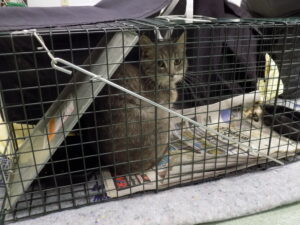 stemming from house pets, the limited and scattershot approaches for feral and free-roaming cats have not been as successful. That’s because sterilizing a few cats from this colony and a few from that colony leaves plenty of cats behind to breed. Humane PA is now taking a different approach, based on data and models with proven success. Since February, under the leadership of free-roaming cat whisperer, Alex Young, our Healthy Pets Initiative staff have been working directly with caretakers of colonies ranging from a half dozen to a hundred cats. One colony at a time, we have been sterilizing 100% (or as close as possible) of partner-managed colonies. By sterilizing every single cat in an extremely short time frame, we ensure there are no new litters, avoid boom and death cycles, and make it possible to effectively intervene when one or two new cats move into a colony.
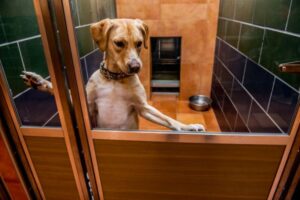 We heard this loud and clear in a recent survey of our supporters. Over 90% of respondents said they thought there needed to be more affordable options. Over 60% of respondents told us that they had faced barriers of some type that prevented them from accessing, including cost or the health or behavioral challenges of their pets. Humane PA knows that some of these pets might end up in shelters if owners can no longer access routine boarding services. Humane PA also knows that there are few or no boarding options regularly available for emergency response, domestic violence victims, those facing health crises, and police dogs.
 services may feel very different or even alien to what is perceived as “animal sheltering”. Although we had the kernel of an idea over a decade ago, since then several organizations around the nation have pioneered boarding programs to address the new needs of their communities to great success. These services are needed and they make a difference, whether it’s the pet of an adopter or a police dog of an officer needing to travel, the cats of someone displaced by fire, the dog of someone who is admitted to the hospital with a heart attack, or the pets of those trying to flee domestic violence
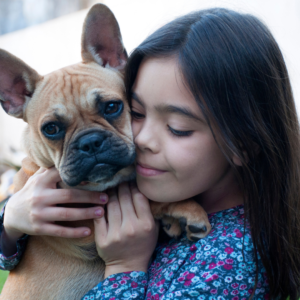 I don’t like to admit it, but as an independent rescuer for decades, I became judgmental of people who struggled to give basic care to their pets. When I met pet owners who did not match my level of pet care, it was easy for me to immediately deem them as uncaring and irresponsible without knowing any further details! However, when I started working professionally in animal welfare, I met people who had the same empathy for the animals, but with far less resources. They were rescuing outside kittens, helping injured strays or inheriting pets from friends/family that can no longer care for them and sometimes, they need a little help.
 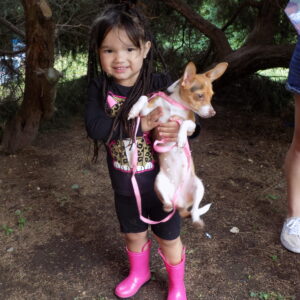 turn, leaves more space at the shelter for the animals that really need a safe place, vet care and possibly a new family (or are reunited!).
 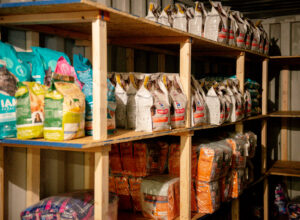 benefit from our organization’s enrollment in a food program that provides the same brand and type of food to everyone. Ongoing participation in this program results in a win-win situation: